Method – Handbooks, Training & Teaching Resources – Research
Episode 1. Why sensory food education?
Episode 2. Food is multi-sensory
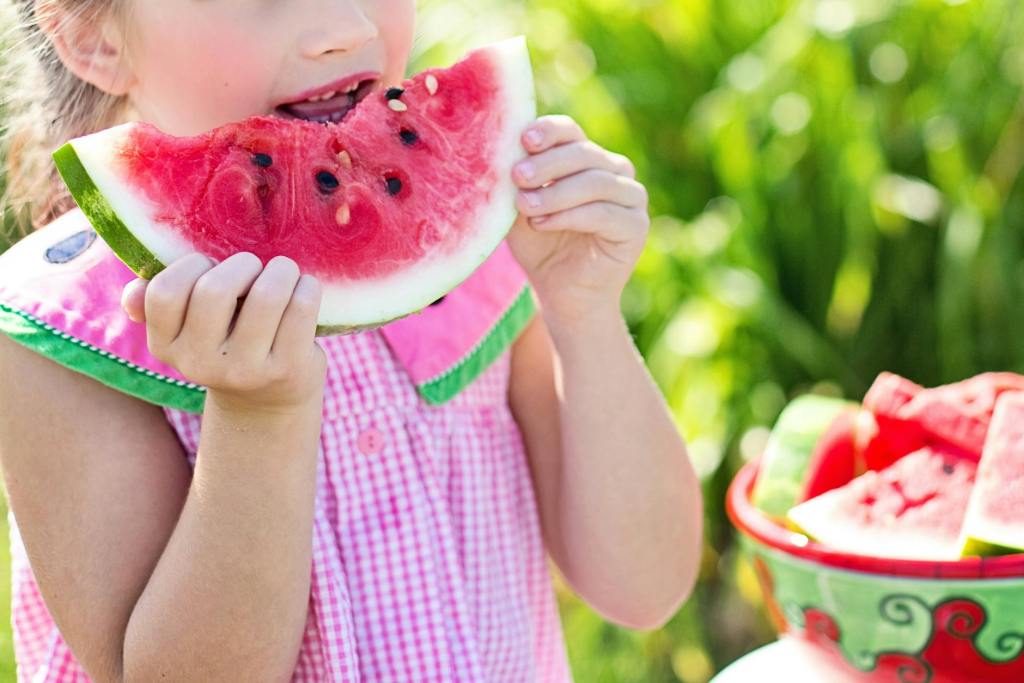
Would you like to open up a new world of sensory food experiences to young children? Then Sapere is the ”go-to” method! This hands-on approach teaches children how to use all their 5 senses to explore food and their own food preferences – using their sight, smell, touch, hearing and taste. Sapere is a joyful, effective and simple way, to build knowledge about our five senses and put the experience into words. The Sapere method is tried out and used in many countries. It’s a new and fun way to better health. Sensory food education can increase children’s willingness to try new food and eat with a larger variety. Learning through play helps build familiarity and can lead to an increased acceptance of new foods.
This episode guides you into the aims and possibilities of the Sapere method.
Our five senses, sight, touch, smell, taste and hearing, help us to explore our surroundings and protect us from danger. We survive, perceive, learn and enjoy with our senses, often without even realising it. The aim of the Sapere method is for children to become familiar with their senses and develop the courage and ability to use them. Children are also given the opportunity to practise their ability to describe sensory experiences and realise that food doesn’t just taste nice or horrible – it can also be colourful, sharp, fiery, airy or crisp. The Sapere method is tried out and used in many countries. It’s a new and fun way to better health.
This episode is a guide to encouraging children to use all their senses, not just one at a time. To discover that our senses interact with one another, and sometimes even overlap, or overpower each other.
Episode 3. What is taste? What is smell?
Episode 4. Sight and touch
The Sapere method is tried out and used in many countries. It’s a new and fun way to better health. Normally, when we talk about taste, saying that something tastes good, is actually a combination of the senses; taste, smell and touch. The sense of taste is in our mouth, mainly on our tongue, but also in our gums and throat. Our five basic tastes are: Sweet, Salt, Sour, Bitter and Umami. Smell is, like sight, a remote sense. We can take in and interpret the information from a distance. Humans can distinguish thousands of different smells, but sometimes we struggle to describe them in words. Developing a well needed language for sensory experiences is one of the core reasons behind the Sapere method.
In this episode you are guided through the difference between taste, smell and aroma.
We eat with our eyes, using our sense of sight more than any other sense. Sight is a kind of sorting mechanism, a first “sensory barrier”. The eyes don’t like to be disappointed. The more impressed we are by how something looks, the more we expect from it, in terms of taste. Touch is essential to how we experience food. Texture, for example, is very important to our taste experience. To analyse, remember and share a sensory experience, words are important. Developing a language for sensory experiences is one of the core reasons behind the Sapere method. The Sapere method is a joyful, effective and simple way, to build knowledge about our five senses and put the experience into words.
This episode shows how the senses sight and touch affects the food experience.
Episode 5. The sound of food & disturbing experiences
Episode 6. Our beautiful food planet
Hearing impacts our food experience. Consider the clattering of pots from the kitchen, crunching of biscuits, butter sizzling in the frying pan, popcorn popping, water running from the tap, soup bubbling and the sound of a knife against the cutting board. The sounds from the kitchen prepare us for the food that we’re going to eat. Some taste experiences can be difficult and needs time to learn to appreciate like bitter and strong spices. Fighting at the dinner table is one way of disturbing or ruining the meal experience. The Sapere method is a hands-on approach to teach children how to use all their five senses to explore food and their own food preferences.
This episode shows what happens when you remove the food’s sound. It also deals with difficult and disturbing food experiences.
The Sapere method is a hands-on approach to teach children how to use all their five senses to explore food and their own food preferences.
This episode shows that sensory food education, like the Sapere method, can be key to build a new generation’s interest in and understanding of food which can be a pathway to a more sustainable food system.
It’s a joyful method for children and teachers alike, exploring the senses, while discussing the role of food in our bodies, lives and on earth.
Method
The sensory awareness method is made up of modules that form the basis for delivering lessons around taste and the five senses.
The taste class programme includes 10 modules.
From the first session about the five senses, to the little educational feast that ends the course, children discover and experiment with flavours: they smell, taste, touch familiar and unfamiliar foods, and discover regional specialities.
The nine key stages of the original method:
1
Children learn that tasting a food uses all five senses both before and during eating.
2
They isolate the sense of taste, identify reference flavours and the role of the taste buds; they discover differences in taste perception, and go beyond “I like it/I don’t like it”.
3
They learn about dominant tastes, experiment with mixing flavours, and test spicy or cold preparations.
4
They explore smell recognition and memory, build their smell repertoire and learn about the difference between smells and aromas.
5
They learn about the importance of sight and colour, which can sometimes be at odds with taste perceptions.
6
They discover the importance of touch and hearing in tasting foods.
7
They learn about changes to the intensity of aromas, the mechanisms of smell, the importance of chewing, and the interesting properties of hot and cold foods.
8
They are introduced to cultural diversity and the variety of regional specialities.
9
They share their taste experiences and enjoy the conviviality of a shared meal with their classmates.
Handbooks, Training & Teaching Resources
SAPERE’s partners have adapted the original method to suit their different countries.
The teaching approach varies depending on national culture, children’s age groups, stakeholder expectations, how the schools are organised and what resources are available. But the spirit of it and the objectives remain the same. And in every country, SAPERE validates the adaptation of the method and guarantees its effectiveness.
Austria
Sensoric Lab have produced this series of videos (German with English subtitles) to help reduce food waste.
Czech Republic
The Czech translation of Food for all senses, the Swedish Handbook published in 2000 by Stina Algtoson and Ulla Hagman is available to download.
France
Those who have received SAPERE training can obtain a box of useful equipment to help deliver their classes or workshops (essences for smell, mystery gloves for touch, cups for tasting, a CD of sounds to listen to etc).
The French version of the Swedish manual is intended for teachers from CM1 to 6th grade. Prepared by Stina Algotson and Ulla Hagman, 1st publication in 2000, new Swedish edition in 2015 and french edition in 2020.
French e-learning course:
Finland
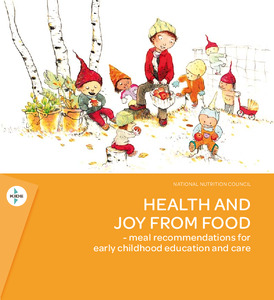
The National Nutrition Council’s guidance for children’s nutrition and food education for nurseries, includes recommendations to use the SAPERE method.
Japan
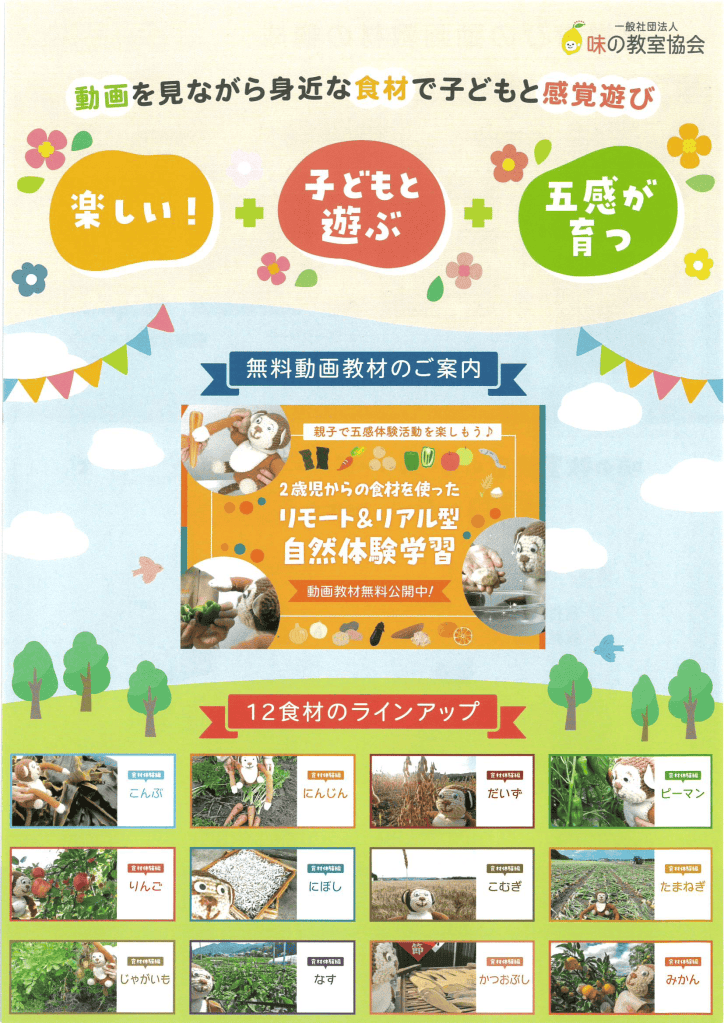
Five Senses provide free teaching materials in Japanese:
Netherlands
Smaaklessen offer engaging and practice-oriented workshops and trainings in the Sapere approach for educators, professionals and other organisations interested in food education, sensory learning, and taste development.
English-language workshops are designed for international audiences and can be adapted to different educational, cultural, and professional contexts.
The workshop format is highly interactive and combines theory with practical experience.
Norway
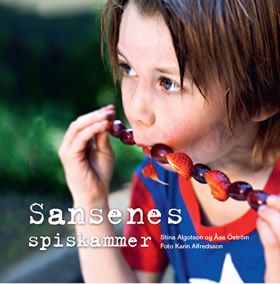
Algotson and Öström’s book for preschool children, Sinnenas Skafferi (Sansenes spiskammer in Norwegian), has formed the basis for the Sapere sessions that developed and evaluated by the University of Adger in Norway.
Sweden
A teaching manual was published in 2000 by Stina Algtoson and Ulla Hagman, called Mat för alla sinnen – sensorisk träning enligt Sapere-metoden (Food for the senses: Sapere method sensory training).
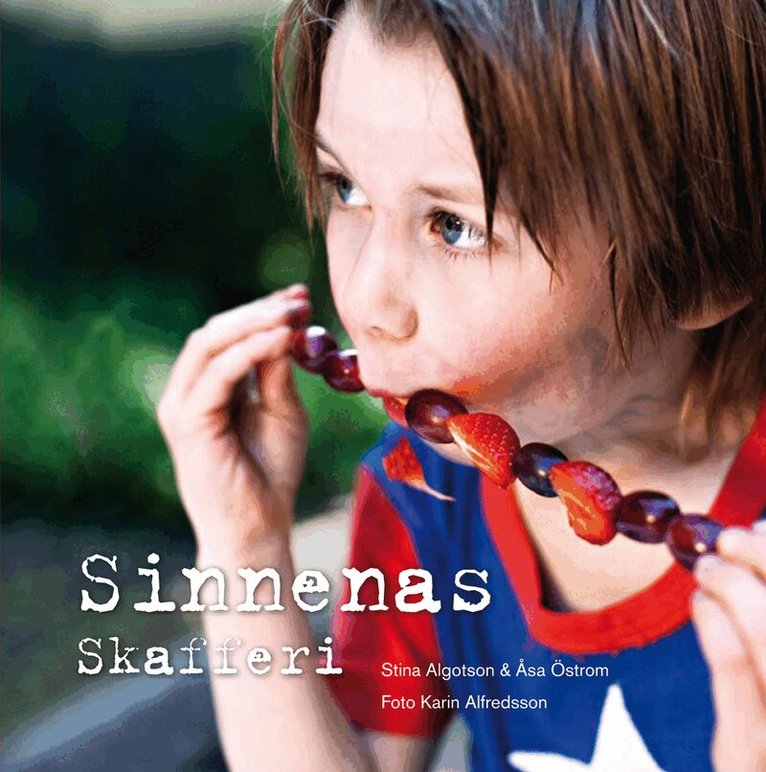
Another manual for nurseries was published by Stina Algotson and Åsa Öström in 2010: Sinnenas Skafferi (Food and the senses).
Switzerland
The teaching resources are available through the Senso5 website to those who have been trained and have obtained the right to use them:
– Activity sheets for pupils
– Technical sheets for teachers
– Various resources: pictures, sensory materials (smells, masks, flavours, touch boxes…)
UK
The English translation of Food for all senses, the Swedish Handbook published in 2000 by Stina Algtoson and Ulla Hagman is available to download.
Fully funded access to teaching resources for UK schools and nurseries is available from TastEd.
More useful resources
Improving our resources
SAPERE practitioners and scientists interested in taste education share insights and experiences so that we can continue to evolve SAPERE resources.
Training options vary depending on the country – contact those nearest to you.
Join the Sapere community
Stay in the loop with everything you need to know.
Research
SAPERE, A SCIENCE-BASED METHOD
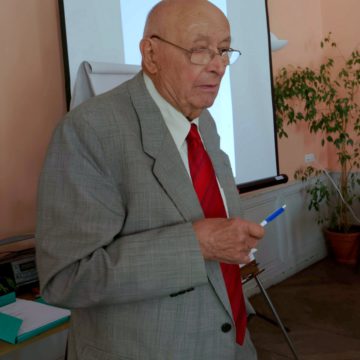
SAPERE was born out of the experiences of Professor Jacques Puisais, a man of science.
A chemist by training, director of the research and analysis laboratory in Tours, France, he built his educational project on scientific foundations from the beginning.
Today, SAPERE is particularly focused on research to understand more about the mechanisms behind food choices and rejection in children.
A European research committee
SAPERE benefits from the expertise of scientific specialists and European universities: Kristianstad University, University of Turku, University of Copenhagen, Københavns Universitet, Aaborg University, University of Milan, etc.
Measuring results
Taste education has long been a topic of scientific interest, with approximately 3000 scientific articles focused on the question of children’s eating behaviours.
SAPERE has developed a tool to measure the method’s effectiveness, which has been applied in various European countries. According to a 2015 Finnish study:
60% of children who had been through taste education classes tried unfamiliar foods,
compared to 35% of those who hadn’t had the classes.
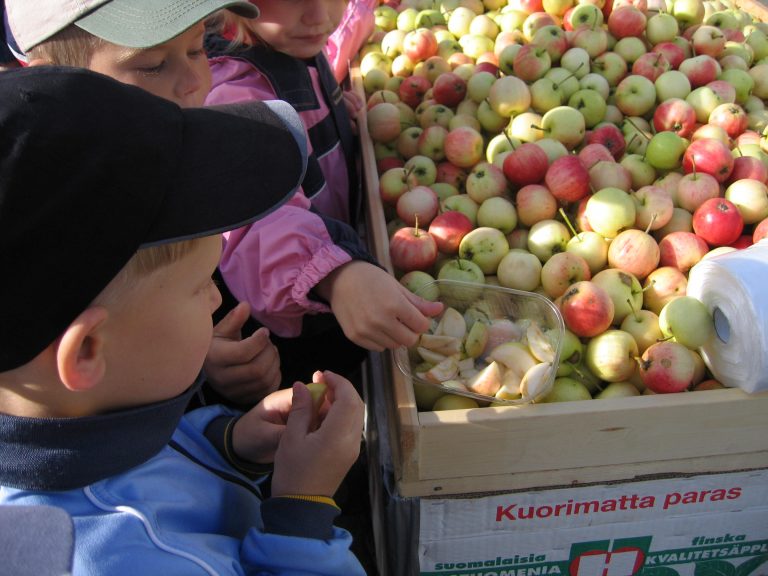
Our organisation also focuses on measuring the effectiveness of different teacher training methods.
See below for research studies and articles about SAPERE:
- Somei, J & Kawaguchi, Y (2025). Spillover effects of food-education activities using the Sapere Method for two and three-year-olds at childcare facilities on food education and children’s likes and dislikes at home a ripple effect on the home. Japanese Journal of Health Education and Promotion 33(2): 87-99
- Blomkvist, E., Wills, A. K., Helland, S. H., Hillesund, E. R., & Øverby, N. C. (2021). Effectiveness of a kindergarten-based intervention to increase vegetable intake and reduce food neophobia amongst 1-year-old children: a cluster randomised controlled trial. Food & Nutrition Research, 65. https://doi.org/10.29219/fnr.v65.7679
- Helland, S. H., Øverby, N. C., Myrvoll Blomkvist, E. A., Hillesund, E. R., Strömmer, S., Barker, M., & Bjørkkjær, T. (2021). Wow! They really like celeriac! Kindergarten teachers’ experiences of an intervention to increase 1-year-olds’ acceptance of vegetables. Appetite, 166, 105581. https://doi.org/https://doi.org/10.1016/j.appet.2021.105581
- Blomkvist, E., Helland, S. H., Hillesund, E. R., & Øverby, N. C. (2018). A cluster randomized web-based intervention trial to reduce food neophobia and promote healthy diets among one-year-old children in kindergarten: study protocol. BMC pediatrics, 18(1)(232). https://doi.org/ https://doi.org/10.1186/s12887-018-1206-8
- Johannessen, B., Helland, S. H., Bere, E., Øverby, N. C., & Fegran, L. (2018). “A bumpy road”: Kindergarten staff’s experiences with an intervention to promote healthy diets in toddlers. Appetite. https://doi.org/https://doi.org/10.1016/j.appet.2018.04.008
- Hoppu, U., Prinz, M., Ojansivu, P., Laaksonen, O., & Sandell, M. A. (2015). Impact of sensory-based food education in kindergarten on willingness to eat vegetables and berries. Food & nutrition research, 59(1), 28795.
- Mustonen, S., & Tuorila, H. (2010). Sensory education decreases food neophobia score and encourages trying unfamiliar foods in 8–12-year-old children. Food Quality and Preference, 21(4), 353-360.
- Reverdy, C., Schlich, P., Köster, E. P., Ginon, E., & Lange, C. (2010). Effect of sensory education on food preferences in children. Food Quality and Preference, 21(7), 794-804.
- Mustonen, S., Rantanen, R., & Tuorila, H. (2009). Effect of sensory education on school children’s food perception: a 2-year follow-up study. Food Quality and preference, 20(3), 230-240.
- Reverdy, C., Chesnel, F., Schlich, P., Köster, E. P., & Lange, C. (2008). Effect of sensory education on willingness to taste novel food in children. Appetite, 51(1), 156-165.

